Firewood for grouse camp
by Joel Schnell
(Released May 9, 2013)
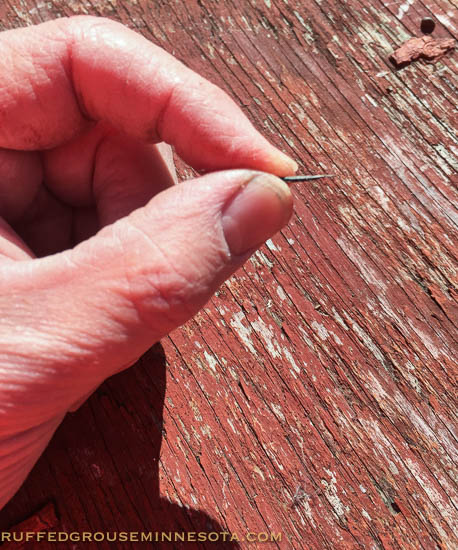
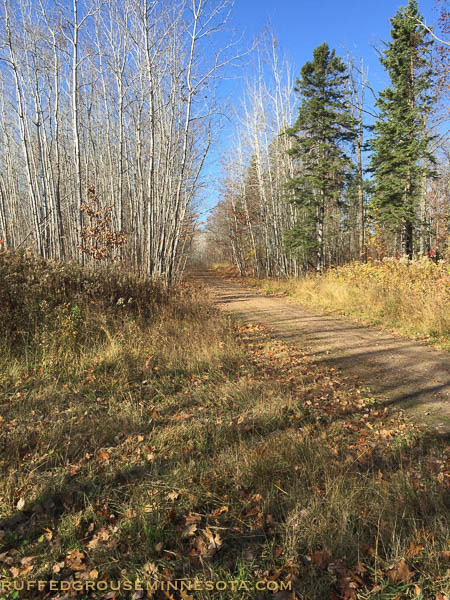
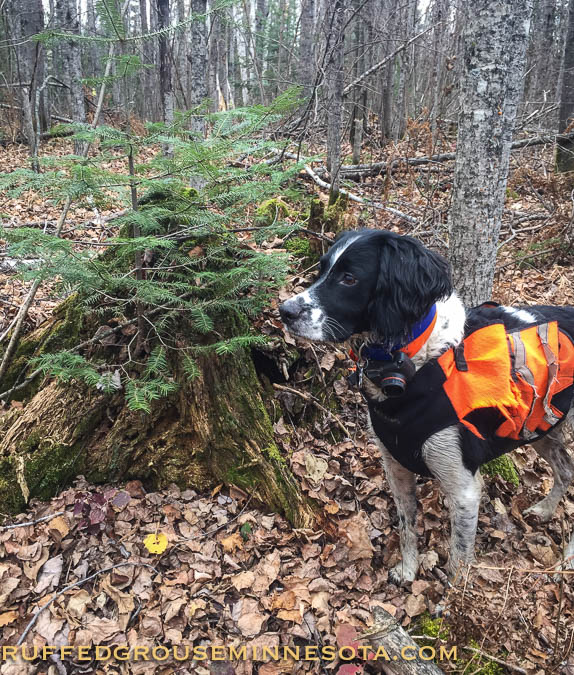
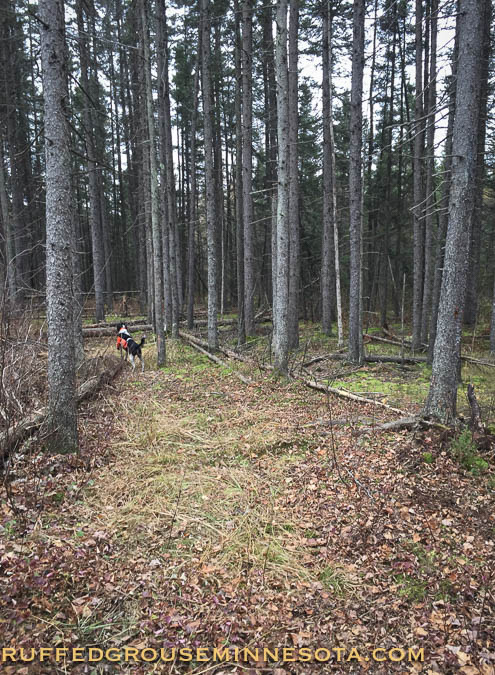
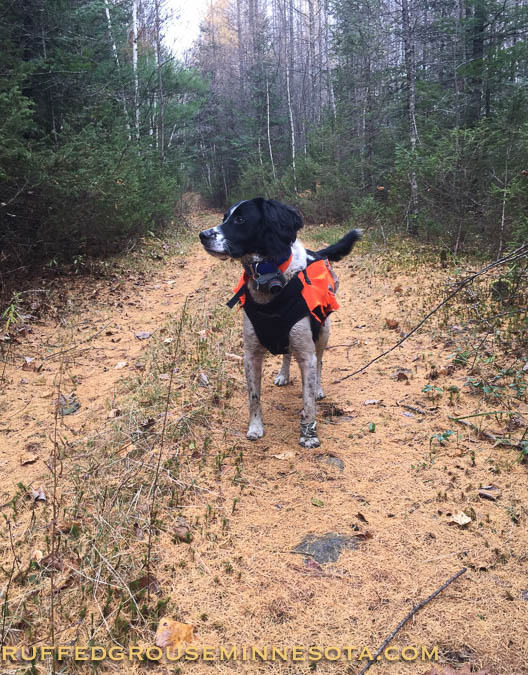
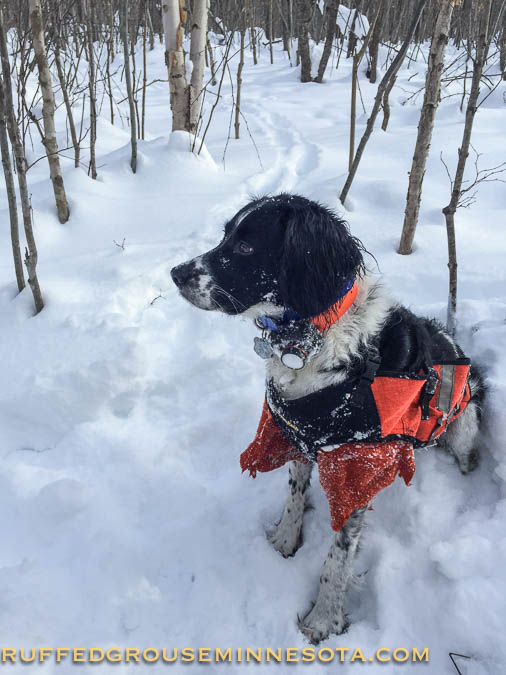
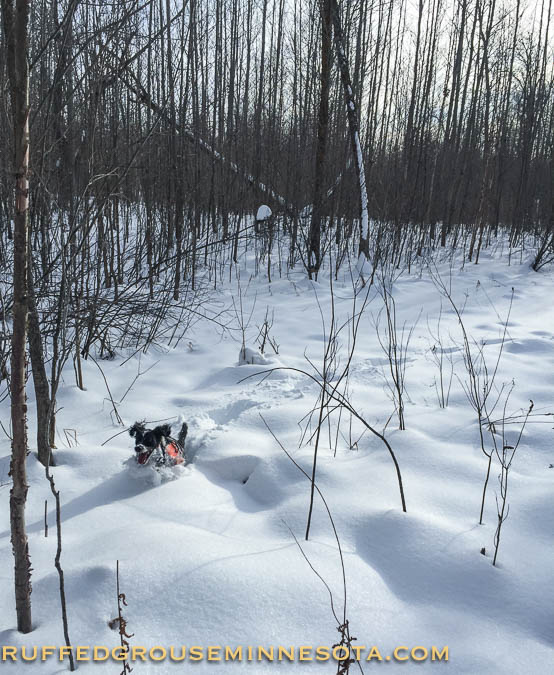
Spring chores at the ruffed grouse camp always includes cutting firewood. Rack it up, let 'er dry, and be ready for those crisp Minnesota October nights. A bird dog curled up next to the wood burner, and your tired stocking feet absorbing the heat, is a fine end to the day. Firewood is a craft, what to burn and how to prepare it is an art for those that appreciate such things. Make an admiring comment about a woodsman's neatly stacked and dry fuel, and you'll likely be offered the keys to the estate.

Chore or not a chore
My Dad didn't start burning wood until my older brothers had fled the household, so I grudgingly became the apprentice wood cutter. I learned to carry earplugs, as the Mac chainsaw only had a spark arrester, not a muffler. And that an old Chevy truck with the 3-on-the-tree shifter is not the easiest to learn how to pull a loaded firewood trailer. The wood craft came along though; how to tell softwoods from hardwoods, how to fell a tree, make a solid wood rack for drying, and splitting by hand maul with the least amount of effort.
Aldo Leopold wrote in A Sand County Almanac of burning good oak:
"Only one acorn in a thousand ever grew large enough to fight rabbits; the rest were drowned at birth in the prairie sea. It is a warming thought that this one wasn't, and thus lived to garner eighty years of June sun. It is this sunlight that is now being released, through the intervention of my axe and saw, to warm my shack and my spirit through eighty gusts of blizzard. And with each gust a wisp of smoke from my chimney bears witness, to whomsoever it may concern, that the sun did not shine in vain."
Hardwoods and softwoods

I have a mixed forest, and I enjoy mixing up some softwoods like aspen with the harder oak and maple. It requires keeping separate wood racks, and bringing in a some of each to the bin in the cabin. It's wise to look up the btu's of the trees on your property. Aspen makes good starter, and on a Friday night it's a luxury arriving to a wood stove filled with tinder and popple, ready to apply a match. I've heard aspen was a prized kitchen stove firewood in the days of wood cook stoves. It burns fast and hot, but the kitchen cools quickly when it dies out. Maple is profuse in my woods so that is my all-day fuel, and solid red oak goes in at night before I turn in.
My wood requirements are modest enough I don't need to use a power wood splitter, it's the hand maul for me. I enjoy the solid crack of the maul on birch setting up on an old stump. It's one of those reflective exercises, that clears the mind of all else but steel striking wood. In this I can identify with Robert Frost, as he turns away the laborers hoping to relieve him of his splitting for pay. I'd tell 'em to hit the road, too. Aiming for the "check lines", cracks on the wood face indicating where to split, requires concentration. Cut and split wood, in a stack with good airflow and tarp only on the top row (not draped over the sides) should dry over the summer. There's always some left over from the year before that's extra dry, if there's any question of what to burn first. I started cutting the traditional 16" long wood pieces, but now I cut for 20" as our wood stove is long enough to handle it. Helps keep a longer night burn with more fuel in the box.
"My dog does not care where heat comes from, but he cares ardently that it come, and soon. Indeed he considers my ability to make it come as something magical, for when I rise in the cold black pre-dawn and kneel shivering by the hearth making a fire, he pushes himself blandly between me and kindling splits I have laid on the ashes, and I must touch a match to them by policing it between his legs. Such faith, I suppose, is the kind that move mountains." - Leopold.
Firewood as a team sport
A sure fire way to get the good graces of a landowner is to offer to help cut and split firewood. It's a great exercise in team building. Some are cutters, some splitters, some are loaders and stackers.
When the cutters get far enough ahead, it's everyone together to chain the pieces to the trailer or log splitter. The conversation along the chain can bridge generations, and you have a captive audience for bad jokes. The evening cocktail hour is surely appreciated after a good day on the chain. Just don't plan for much mobility the day after, as you will find sore spots in muscles you didn't know you had.
Joel Schnell is publisher of www.ruffedgrouseminnesota.com
Adventures with Cody
by Joel Schnell
(Released April 25, 2013)
Your first bird dog will change your life. She may not be the best hunter, but she will teach you how to be a better hunter, and maybe a better person. A good dog may only be in our lives for a dozen years or so, but you will never forget them.

It all begins with a pup
Cody was named after Cody, Wyoming, a favorite place of mine as gateway to Yellowstone park.
I couldn't leave her with the name the breeder gave her- Stash, as in mustache of freckles. At eight weeks of age, I could carry her in one hand when bringing her home. She was a smart one, and could get into all kinds of trouble. Once a roommate of mine said she learned how to open doors. I didn't believe it- until I saw her put her paws on the door just below the knob with a bump, and the door sprang open. She had a knack for those kinds of things. Once at my brother's house, she got into some rawhide his dog wouldn't chew. I took it away from her, and put it on top of the fridge. Cody sized up the situation, walked up the stairs, walked across the top of the fridge and retrieved her rawhide.
On our first outings in the woods, she gamely ran along, but couldn't clear the sticks and fallen logs I'd easily step over. So she'd sit on her butt, and make a sharp bark, until I lifted her over the obstacle. Our first years of hunting we tried to get into a groove, but needed help. A month's stay with a trainer and lots of exposure to pigeons was the prescription. It was then I learned that it's not dog training- but human training I needed. Once at Game Fair the famed Delmar Smith was giving a demonstration, and saw Cody in the front row in rapt attention. He asked if he could give her a whirl to show some techniques, and she didn't disappoint. Delmar said "You've got a good dog here"- high praise indeed!
Nemesis of a bird dog
Cody and I road tripped from Wisconsin to the Dakotas in search of ruffed grouse, woodcock,
pheasants, huns and sharpies. We avoided the porcupines and skunks, but one of Cody's nemesis was barbed wire. Twice she tangled with it, and a nastier gash a rusty strand of long abandoned wire can make is hard to find. Count on lots of washing with peroxide, and covering in vet wrap after a few stitches. Her other deposits to my vet's retirement fund included swallowing a stick on the run, drinking foul gardia infested water, stepping into a leghold trap, and a torn rotator cuff. The rotator cuff tear happened on the last day of a Dakota hunt, and seeing her crumple when putting weight on her back leg I knew her hunting was over for the year. Fortunately, my vet is also an accomplished hunting dog surgeon and repair of a rotator cuff is a specialty. With what amounts of tying up a leg into it's socket with fish line, he gave her many more years of productive hunting after what should have been a career-ender.
Trapped in a blizzard
On the North Dakota prairie, winter can come early. Late October can find you in a blinding blizzard
with little to stop the howling wind-driven snow. When hunting with a group, we made a long push up along a creek, and the pheasant shooting was good. Those ringnecks would hunker down from the storm, then flush darn near under foot. First the wind picked up, then the rain started, then the temp dropped, and the snow came in sheets. Cody was good and wet, and after a spell she lagged a bit, then just stopped and sat down. She was shivering, so I told the guys I was taking her back to the truck. We didn't get far when she just laid down and wouldn't move. With the fellas heading in the opposite direction and no cover in sight, we were in a pickle. I broke down the gun, stuffed the parts in my game pouch, and tried to carry Cody. But it was too far for me to go and she was freezing to death. I finally decided if I was to save her I had to go back and bring the truck in closer across the field. I took off my coat and laid it on the ground, and Cody quickly curled up on it as the only dry spot. Fortunately I had a fleece layer on beneath it, and took off for the truck. I drove back to about 150 yards from where I left her, and anxiously ran back to get her. I found Cody, still on my coat, licking herself dry and the shivering stopped. She had recovered enough to make it back to the truck, though I'll never forget how close I came to losing her that day.
Brittany rivals
I couldn't have asked for a better Minnesota ruffed grouse dog. When Cody was 10, I brought home
another Brittany pup and Cody was not pleased. But she got the bulk of the field work until Maggie was ready to take over. By that time her muzzle was growing gray, and she was hard of hearing. Finally it was time to retire her when she'd get disoriented and couldn't hear my commands and get lost. Later I'd still bring both dogs, and let Cody putter around the parking area before heading out and after coming back, and that seemed enough for her. Cody made it to the ripe old age of 15 before her legs gave out. I made that last visit to the vet, and brought a ruffed grouse tail fan to nuzzle as she entered her final sleep. She's buried near my cabin along the edge of the alder run, where maybe she can hear a drumming grouse, and enjoy spring's woodcock doing their sky dance, from the beyond.
Joel Schnell is publisher of www.ruffedgrouseminnesota.com
Donate to this website
Rethinking the hunting camp outbuilding
by Joel Schnell
(Released April 10, 2013)
First order of business in any hunting camp is often the outhouse (well, okay, maybe it's the sauna for the Scandinavian-Minnesotans). The nineteenth-century solution is dig a hole in the ground, put a drafty shed over it. I think we can do better. With a little research, I came up with a composting toilet solution. I've already written a trilogy of how to build a Minnesota hunting camp, and this completes our story.

Structure first
I decided on a modular build of a 4x6' shed, built in my garage and assembled on site. I used the plans for a Mini Garden Shed from a DIY book I photographed. I framed up the walls, and loaded it on my utility trailer for the trip up North. Assembly went pretty quick, and I had some leftover siding and roofing to match the hunting cabin. The window was salvage and the door made from a panel of cedar siding.
Compost Solution
The toilet is constructed around a 5 gallon bucket lined with a corn-based plastic biodegradable bag. Next to it is a bin filled with absorbent sawdust or peat moss. A scoop of the absorbent is added in lieu of flushing. At the end of the weekend, the liner bag goes in a wooden compost bin by the driveway as we leave. The whole process should be odorless. There's room for a sink for washing up, and a propane lantern provides light and heat. Note that these pictures were taken before all the siding was put up and the interior insulated.
My cabin is designed to be a part of the environment, and preventing waste from contaminating the watershed is part of the deal. I might even catch a glimpse of a drumming grouse out the window while, err, occupied.
Time for new ideas
This type of solution is an idea whose time has come. Our privy, without a big hole in the floor, can be insulated and heated during winter. It's warm, dry, clean and well lit- unlike your grandfather's outhouse. And it's a solution that doesn't require a water supply. Former broadcaster Don Shelby has been promoting a similar solution of waterless urinals for public buildings for some time. One of the I35 highway rest areas near Sandstone, MN uses them, as an example. There are also a number of manufactured composting toilets for those that prefer a more finished look. During the gun deer hunting season, an early morning necessary trip outside when it's below freezing doesn't have to be dreaded like in the past.
Joel Schnell is publisher of www.ruffedgrouseminnesota.com
Donate to this website